
Who We Are
Gas Alert for Sustainable Initiative is a faith-based non-profit, non-political and a non-governmental organization with an expert background in the effects of gas extraction, processing and distribution in Nigeria... Read more
Vision & Mission
GASIN’s vision is aimed at creating a better and more conducive environment for the communities where gas exploration is going on, as well as for Operators and Government through designed activities... Read more
Our Core Values
In every economic, political and social decision, we give a weighted concern to the needs of the poorest and most vulnerable in our midst in order to strengthen the entire community, because the powerlessness of any member hurts the... Read more
GASIN ICT

GASIN Sets Up Gas Alert System in 12 Niger Delta communities, Trains Community members on EIA, HSE, Negotiation Skills, Others.
By GASIN Reporter
GASIN has, in the last 24 months, set up Gas Alert Systems (GASs) in 12 communities in Bayelsa and Rivers states. Gas Alert System is a system whereby a community-based groups called the Gas Monitoring Groups (GMGs) inaugurated by GASIN, trigger alerts, document and report incidents or accidents related to natural gas exploitation activities, for timely response by the operating companies and regulatory agencies.
The overall objective is to maintain a safe environment and secure livelihoods in communities located around gas facilities in case of emergencies. This system is an initiative of GASIN and is sponsored by The Dutch Embassy in Abuja, and Cordaid. The system is made up of gas-detecting, geocoded imaging and reporting gadgets and use of dedicated phone lines for information relay among stakeholders.
The information gathered by the GMGs is communicated simultaneously to the operators, the regulators and GASIN through dedicated phone lines. GASIN staff would then visit the sites to validate incident reports and follow up the operators and regulators respectively. Internally, GASIN documents the responses of each stakeholder, and maintains external advocacy, in collaboration with the community representatives, until the incident is fully resolved. Community representatives then return to inform their people on what happened and how it was resolved, including any lessons that may be learned from the incident.
GASIN sees an important value in bringing about this sense of responsibility and ownership in communities, because, in this participatory approach, all stakeholders, including communities, operators and regulators, work together for the common good of preventing accidents and incidents. GASIN follows up all GMG reports to ensure, through lobby and advocacy, that appropriate mitigation measures are deployed without any need for violence. Hence, GASIN's approaches remain peaceful and respectful in order to engender peace among the stakeholders of the growing gas regime even in the face of conflicts.
The volunteers (GMGs) from the communities were selected by the communities' respective focus groups and trained by GASIN on various areas. The trainings designed and conducted for them covered report writing, negotiation skills, and Environmental Impact Assessment (EIA), 'Health, Safety and Environment' (HSE), Joint Investigation Visits (JIV) and the technicalities of the Gas Alert System. The training was meant to educate the GMG members on relevant subjects to accord them the requisite capacity to carry out their duties on behalf of their respective communities.
During the training, case studies of resource exploitation issues and environmental challenges in their respective communities were reviewed and used to make broad clarifications. The communities benefitting from this system include Polaku, Koroama and Obunagha in Gbarain kingdom of Bayelsa state; Ebogoro, Obie, Obrikom, Mgbede, Okwuizi and Aggah of Ogba-Egbema-Ndoni Local Government Area (ONELGA) of Rivers state, and Oshie, Akala-Olu and Enito 2 of Ahoada-West Local Government Area of Rivers state.
Relevant hotlines are provided for the GMGs and also displayed on GASIN billboards in all the communities in order to encourage the community members to make reports to GASIN and government regulatory agencies. In GASIN's office is a gas alert operator (GAO), whose responsibility is to receive alerts from GMGs. In setting up the gas alert system, we have demonstrated to the community members that they can take responsibility for their own safety and encourage other civil society organizations to consider this sustainable approach. The system has yielded positive results in these areas.
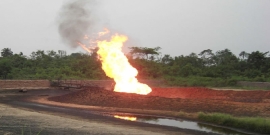
An Extract from GASIN Knowledge Base on Gas Industry Facilities and Safety Concerns
By GASIN Reporter
The direction of Federal Government of Nigeria (FGN) towards gas, according to the Nigerian Gas Master Plan (GMP), is to fully exploit the potential in gas for accelerated economic development, in pursuit of the 10% GDP growth aspiration with a concurrent focus on a viable domestic, regional and other export markets. The GMP shows that three (3) central gas gathering and processing facilities (CPF) will be located in West Delta (Warri/Forcados area), Obiafu (North of Port Harcourt), which is one of GASIN's target communities, and in Akwa-Ibom/Calabar area. In these CPFs, wet gas will be treated, liquefied petroleum gas extracted and lean gas exported into transmission system (NNPC, 2008).
The processes involved in the exploitation of natural gas are enormous, which is why a basic or preliminary understanding of the issues associated with this sector cannot be over-emphasized by the stakeholders. Already, the various gas fields have been identified, some of which have been barricaded by the gas companies. This, most importantly, determined the siting of the CPFs. The transportation of natural gas by pipeline during the exploration and utilization etiquettes is categorized, an understanding of which clearly depicts the facilities, installations and safety issues, which should be of primary concern around the gas fields and CPFs. Gas production, transmission and distribution pipelines are the three common categories of pipelines used in the transportation of natural gas.
Gas production pipelines, also sometimes called gathering or flow lines, are those pipelines connecting the gas producing field wells to gas processing plants that process or treat the gas to meet transmission pipeline quality specifications. In most gas processing plants, liquid is removed and the gas dried to substantially reduce corrosion potential. Additional treatment of the gas may be required to remove certain higher risk contaminants, such as H2S, if present in sufficient quantities, to prevent problems on transmission pipelines.
Because most production gas can contain the multiple phases of solid, liquid (water and hydrocarbons), and gas, production pipelines must be able to withstand additional “reactive forces,” both internal loading stresses (i.e., slugging) and chemical, not encountered on transmission or distribution pipelines.
The corrosiveness and toxicity of the gas is dependent on the specific gas composition and there are usually very limited, if any, regulatory restrictions on many contaminants that can seriously chemically attack, impact the pipeline, or create other problems on their release. Depending on their pressures, production pipelines can fail as either leaks or ruptures.
Gas transmission pipelines are those pipelines that move or transport conditioned or treated natural gas, meeting various quality specifications, from the gas fields or processing plants to the lower pressure distribution systems. Transmission pipelines tend to be larger in size, moderate to moderately high in pressure, and traverse long distances as their primary purpose is to move large volumes of non-reactive gas as economically as possible. Usually such main arterial pipelines consist of one large diameter pipeline, though multiple main pipelines can be run in parallel (called looping) to increase capacity.
Along the transmission pipelines are compressor stations to re-pressure the gas as it moves down the system. Transmission pipelines operate under published quality specifications requiring that the gas carried be non-reactive and non-corrosive to the pipeline. Transmission pipelines are operated as a single-phase, gas, mainly composed of methane and other minor components (i.e., ethane, propane) and inert gases (e.g., nitrogen, carbon dioxide). Odorant with a very distinctive smell is usually added to the gas in transmission pipelines to aid in the identification of possible gas leaks from these systems, though not all countries require odorant on all transmission pipelines.
Gas distribution pipelines consist of a network of lower-pressure gas pipelines usually taking gas from transmission pipelines, at various points down the system, through pressure reducing (i.e. pressure-relieving)/metering stations that drop the gas pressure from the transmission system pressure to the much lower pressure distribution system.
Distribution pipeline systems consist of a grid of larger diameter pipes called mains, and smaller diameter service lines that run from the mains to connect directly to homes or businesses. Because distribution systems are in close proximity to large concentrations of people, they are designed and operated at much lower pressures (usually much lower than 14 Bar, or 200 psig) than production or transmission systems. Newer modern distribution pipelines are made of steel or plastic while older networks may be cast, or wrought iron, or other metals such as copper. Because of their much lower pressures, distribution pipelines fail as leaks rather than ruptures. Odorant is added to the gas in distribution pipelines to aid in the identification of possible gas leaks, both in the distribution system piping and in the much lower pressure home piping, where available.
On the other hand is Gas Processing/Treatment Plant or Gas Terminal. Typically, along a production pipeline is a processing plant that contains equipment to process or treat gas gathered directly from field producing wells, permitting the natural gas to meet quality specifications for transmission pipelines. Depending on its capacity, a processing facility may accept more than one production pipeline. Processing facilities are usually located on or near gas production fields particularly if the gas is especially reactive. Presently, there is a gas processing facility operated by Nigerian-Agip Oil Company (NAOC) in Ebocha, which is also in the same axis where the FGN has cited a gas CPF according to the GMP. These two communities are among GASIN's target communities. So, it is obvious that some, if not all of the types of natural gas pipelines explained above traverse some communities around Ebocha.
In addition, the handling, transportation treatment or processing of natural gas go with a good number of health, safety and environmental (HSE) issues ranging from environmental pollution from leakages, venting, flaring and liquid/solid discharges to other health and social issues. Natural gas is not found pure as it is often associated with other elements and compounds. Thus, the composition of produced gas varies and the composition factors are especially important on production gas pipelines as composition can seriously impact the operability of a pipeline, especially the pipeline's integrity. Critical composition issues include the wet gas versus dry Gas factor and gas components other than methane.
Concerning the Wet Gas Versus Dry Gas, it is extremely unusual for gas produced from a gas field to be in a dry state. The presence of water is almost always assured. Gas containing water is classified as “wet gas” and brings with it certain risks to a pipeline operation. Water is required for internal corrosion on pipelines to occur. In addition, water or other liquid slugs can seriously change loading stresses on a pipeline. Slug catchers, which are large catch vessels installed to trap liquids, are placed along production gas pipelines. The settlement of water in low points in production pipelines can also serve to concentrate and accelerate selective internal corrosion attacks that can occur much faster than general corrosion. As a result, over emphasis on a general corrosion allowance to protect a pipeline can be ineffective at preventing pipeline failure from selective rapid corrosion attack, especially on production pipelines most at risk from such occurrences.
Components other than methane in produced gas can also have serious impacts on production pipelines. Carbon dioxide and certain sulphur compounds (e.g., CO2, H2S) in the presence of water can lead to acid attack and internal corrosion. Heavier components, such as propane, butane and heavier (C5+) will also tend to form liquids and periodically drop out along the pipeline adding to loading stresses associated with liquid slugging. The stated design components of a gas pipeline and gas composition may not necessarily be compatible as the gas field ages, or if a new gas field is brought on line and tied into the same production pipeline. These changes can affect the internal corrosion rate as well as the internal corrosion potential on the pipe. Thus, adherence to internationally-accepted standards is one of the key monitoring tools GASIN uses in favour of the stakeholders to advocate for preventive measures against the causes of pipeline ruptures and gas leaks.
Thus, liquid contaminants, consisting of hydrocarbon and water must be removed from the wet production gas as such liquids not only add to corrosion potential but also create the internal loading stresses on pipelines that can be quite high, especially when these accumulated liquids are driven by the high pressures from the gas field and production pipeline. In addition, unique contaminants such as excess CO2 or H2S must be treated if they are present in appreciable quantities that might affect transmission or distribution pipeline systems or customer safety.
Cold venting and excessive flaring in a gas processing facility are of major concern. Cold venting is the release of gas, usually methane, out of a gas processing plant via vent stacks to atmosphere in such a manner that it is not burned. The theory is that the lighter-than-air gases rise up into the atmosphere. While most vented gas streams are mainly methane, which is lighter than air, serious safety concerns appear when heavier-than-air components or toxic chemicals start to show up in the gas stream than might be vented.
Cold venting can be very dangerous, not only for the neighbouring population but also for the plant personnel. Depending on the composition of the material in the gas stream, especially if a plant is located on a site in proximity to people, dispersion can send heavier-than-air gas components to ground level with tragic results like health issues due to exposures. Cold venting is usually the by-product of remote oil field design, but an over-focus on capital reduction for gas field development (i.e., to boost rate of return) can drive a company to select cold venting over wiser alternatives that require additional equipment.
Cold venting should not make sense in a world where energy prices are increasing, but it can still occur because of the economics and investment philosophies of particular companies. Failure to properly restrict the option of cold venting should be regarded as a serious deficiency and prevented in any modern processing plant design and approval. Several responsible governments and world agencies have incorporated practices to discourage cold venting in their energy field development. It is in GASIN's interest to advocate for the enforcement of such practices by the Nigerian government.
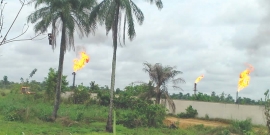
By Rev. Fr. Edward Obi, MSP (PhD)
Preamble
As agreed, the theme of this Meeting is Climate Change and Environmental Justice, I would like to start from the most recent information I have got on the matter, and that comes from Shell's Sustainability Report, published only this week.
This report claims that more than one-third of the world's CO2 emissions come from electricity generation. Natural gas produces around half of the GHG emissions compared to coal across its life cycle, from production through to use in generating electricity (Shell Sustainability Report, 2013, pg. 10). The authors of the Report therefore canvass “switching from coal to gas for generating power as the quickest and most affordable route for many countries to achieve their CO2 reduction targets.
Furthermore, natural gas can be used as a single source for power generation, as well as a flexible back-up for renewable energy. It produces less of the smog-causing pollutants sometimes associated with coal plants, which benefits local air quality” (pg. 10). This meeting, I believe, seeks to create the right balance between two seemingly opposed ideas, namely, meeting the need for economic development and that of protecting and preserving the environment for present and future generations.
The test of a first-rate intelligence, said F. Scott Fitzgerald (1886), is the ability to hold two opposed ideas in the mind at the same time, yet still retain the ability to function. So try this for size: Proposition 1 is that capitalism is helping to drive the Sixth Great Extinction, sending species and ecosystems to the wall – and undermining our climate into the bargain. Now set that against Proposition 2, which asserts that capitalism will save the world for future generations.
The missing fact, of course, is that capitalism – like life itself – is almost infinitely flexible, having gone through many profound transformations over generations. Proposition 2 is thus perfectly possible, but how could you tell whether a given company, industry or economy was on the right path to attaining this balance?
In the Sustainability Report just quoted I have seen both direct and indirect reference to the 'shared value' between the company and the wider community that the exploitation of our natural resources could bring. Question: Can a company claim shared value to society if its business model is rooted in a harmful product or practice?
Would this not be tantamount to giving with one hand and taking with the other?
Where is environmental justice located in a system that first destroys the environment and peoples livelihoods in order to create shared value?
Indeed, who will enjoy the shared value with the impairment that this industry masterminds in many cases.
At this point, may I hasten to say that this not just about Shell, but about corporations in general and their business models.
The Gas Sector in Nigeria
The Petroleum Industries Bill (PIB), which is still before the National Assembly, seeks to establish a legal, fiscal and regulatory framework for the oil and gas industries that would bring about the objective of the Federal government, namely to energize the structure of the gas sector to be investor-friendly.
This involves, among others, to support continued cost effectiveness in supply of all markets (domestic, regional and export), with capacity that is scalable and, above all, be fully liberalised and market driven. The current Bill breaks up the NNPC into four parts: the National Oil Company (NOC) Plc, the National Gas Company (NGC) Plc, the Upstream Petroleum Inspectorate and the Downstream Petroleum Regulatory Agency.
For the first time in Nigeria's oil and gas history, natural gas will be treated separately from Petroleum and its associates. The implications of this are enormous. It means that there will be separate and deliberate investment in gas infrastructure and services, both of which come with their problems. Though the investment, according to the International Oil Companies (IOCs), is still scant from the government side, there is clear intent to make this sector more robust in both capital investment and infrastructure outlay.
This was confirmed recently by none other than the Minister of Petroleum Resources, MrsDeziani Alison-Madueke, when she presented her Ministry's score-card. She is reported to have touted an impending “Gas revolution” in Nigeria, with “a significant improvement in gas to power supply for electricity generation up to five Gigawatts, establishment of commercial framework for gas, massive development of gas infrastructure across the country” (Vanguard Newspaper, 24th July, 2013, p. 9).
One major destination for the gas would be to the power sector that needs to expand from the present average of 3.7 Gigawatts to the over 15 Gigawatts needed urgently to support the nation's economic growth potential. There will, therefore, be a proliferation of gas power plants to meet the shortfall in the near term.
Already, there are ten (10) of these power plants under the National Integrated Power Project (NIPP), which the nation is currently privatizing towards the achievement of the energy objectives. These power plants, seven (7) of which have been completed and concessioned to winning bidders at a whooping USD4.2 billion, will all use gas supplies from the Niger Delta for power generation.
Obviously, it is easy to see what is envisaged by the authors of the Master-plan, namely to key into, and exploit that gas potential for “accelerated economic development, in pursuit of the 10% GDP growth aspiration”,1 and ultimately the attainment of the President's Transformation Agenda, and the much canvassed Vision 20-20-20.
In my opinion, there will be even more pressure now with the rebasing last Sunday of Nigeria's GDP! There will in fact be a bullish approach to these expansions without the appropriate or commensurate attention to the health and safety of ordinary citizens.
My Provocation
Nowhere in all these elaborate arrangements has consideration been given to human persons that might be affected and impacted by this budding gas industry.
The toxic by-products of this process, as I shall demonstrate, are many and varied, and may bear down directly on the human, animal and aquatic populations in the Niger Delta.
The absolute lack of transparency with regard to the processes deployed to extract natural gas is a disturbing phenomenon. In addition, when companies are issued permits to drill, they have not traditionally been required to account for how the resulting liquid and solid waste would be handled. In short, their focus has not typically been on health and the environment.
In keeping with the rush to produce more natural gas to power a growing economy, technological advances have permitted the industry to drill deeper and expand wider, tapping into gas reserves with greater facility and profitability. While these advances have allowed the mining of vast, newly discovered gas deposits, the new technology depends heavily on the use of undisclosed types and amounts of toxic chemicals.
Drilling and Dehydration process
It is important to quickly draw the attention of all to the fact that raw natural gas comes out of the well along with water, various liquid hydrocarbons including benzene, toluene, ethylbenzene, and xylene (as a group, called BTEX), hydrogen sulfide (H2S), and numerous other organic compounds that have to be removed from the gas.
When the gas leaves the well it is passed through units called heater treaters that are filled with triethylene glycol and/or ethylene glycol that absorbs the water from the gas. Glycol has hygroscopic properties, and so absorbs water and everything else that behaves like water. Once the glycol solution becomes saturated with water, the heaters turn on and raise the temperature high enough to boil off the water, which is vented directly into the atmosphere or, in some cases, through a closed system.
Let me underscore the fact that heat energy in required to purify the glycol for reuse, however, the heat also causes bonding to occur between the glycol and all impurities accompanying the raw gas, e.g. salts, alcohols and other hydroxyls.
Upon cooling, this glycol already bonded with water, salts, alcohols and other hydroxyls is channeled into a nearby tank labeled “produced water”. The glycol fluid, which has a higher boiling point than water, cools and is reused. During the heating process at critical temperatures the oily substances that came up with the gas become volatile and then re-condense into a separate holding tank. This is known as “condensate” water.
The contaminated water can be re-injected underground on the well pad or off site, or hauled off the well pad to waste evaporation pits. Temporary pits are also constructed during drilling to hold the cuttings, used drilling mud which is often re-used, and any other contaminated water that comes to the surface while drilling. These reserve pits on well pads are supposed to be drained and covered with top soil or other suitable material within a month after drilling stops.
From the first day the drill bit is inserted into the ground until the well is completed, toxic materials are introduced into the borehole and returned to the surface along with produced water and other extraction liquids. Industrial process literature indicates that it is common practice to hold these liquids in open evaporation pits until the wells are shut down. In the USA this could be 15 to 25 years, but in Nigeria this could be 50 years and above.
These pits have rarely been examined to ascertain their chemical contents. One cannot even say with certainty whether limited parameters such as primarily metals, chlorides, and radioactive materials are being checked. Scientific knowledge from other parts of the world shows that extremely toxic chemicals are found in evaporation pits and indeed, these and other similar sites may need to be designated for cleanup.
Our suspicion is that in Nigeria some companies are re-injecting these chemicals underground, creating yet another potential source of extremely toxic chemical contamination of underground water sources.
Groundwater Contamination
From the foregoing, it is easy to see why scholars like Richard J. Davies et al, in a very recent article writing under the theme of the integrity of oil and gas wells, raised questions about the possible environmental and health risks associated with these processes, such as the potential for groundwater contamination (e.g.) and fugitive emissions of hydrocarbons into the atmosphere (e.g.).
There were at least 5 new and different peer reviewed articles published in 2013 alone, expressing this anxiety. Here I am happy to point to Jackson et al., 2013; Vidic et al., 2013; Miller et al., 2013; King and King, 2013; to say little of the ground breaking publication of the IPCC, also in 2013. All of these come on the heels of the well articulated report of the Royal Society &The Royal Academy of Engineering Report in 2012.
Note that boreholes drilled to explore for and extract hydrocarbons must penetrate shallower strata before reaching the target horizons. In addition to protecting ground and surface waters, effective well sealing prevents leakage of methane and other gases into the atmosphere. This is important as methane is 86 times more effective than CO2 at trapping heat in the atmosphere over a 20-year period and 34 times more effective over a century.
Once again, to regenerate the EG, one adds (heat) energy to the system. But this energy is also sufficient to have EG react with salts and create fur-like deposits in the boiling system, just like one gets magnesium and calcium-based deposits on a cooker/boiler when (hard) water is brought to boiling point.
This energy can also cause other -OH-molecules to react to/with other substances as well, which may have accompanied the wet gas from the earth. Here a special group of so-called aromatic compounds comes to mind. These have an exceptionally reactive end-group. Phenol is the -OH-variant, and so is Benzene, Toluene, Ethyl-benzene and Xylene.
Note that the compounds so far named are formed during the required boiling process to regenerate EG, and it is the lost 5-10% that often reacts with other micro-molecules in the natural gas, increasing their boiling point, and making them impossible to break down.
These will therefore ultimately remain as residue: a black carcinogenic tar that can only be incinerated at very high temperatures. The problem : nature uses process kinetics with the implication that adding energy like heat will result in a new stable compound at a higher energy level, and this means, to change the new compound, one must add even more energy. How much energy can humans generate in order to break down the stable compounds they might ingest/assimilate? Very little, indeed.
There is good scientific evidence that short and long term exposure to BTEX has negative effects on the semen and accessory gonads of people, especially workers, exposed to them over long periods. A study carried out on rats, for instance, revealed that “a subacute exposure of male rats to a high level (2000 ppm) of toluene vapour can elicit mild toxic changes in the kidneys, thymus, and reproductive organs of males…. In male rats… ethyl acetate and xylene were reported to interfere with the functions of the testes and accessory reproductive organs” (Xiao et. al., 2001. Effect of Benzene, Toluene, Xylene on the Semen Quality and the Function of Accessory Gonad of Exposed Workers, Industrial Health 39, 206-210).
The endocrine system is the exquisitely balanced system of glands and hormones that regulates such vital functions as body growth, response to stress, sexual development and behavior, production and use of insulin, rate of metabolism, intelligence and behavior, and the ability to reproduce. The endocrine system operates at very low concentrations of hormones, often in parts-per-billion or less, making it susceptible to very low levels of exposure, which can impact organisms and their offspring, including humans.
Prenatal exposure should especially be avoided. Endocrine disrupting effects include reduced sperm production, infertility, hormone imbalances, effects on the thyroid, adrenals, pituitary, and more. Effects like these might not be seen for months or years and would be difficult to trace back to exposure to gas industry chemicals. But this does not remove the fact that exposure to gas and other Volatile Organic Compounds (VOCs) is largely responsible for this.
Needed, therefore, is the requisite transparency with regard to the processes deployed for gas extraction, and what chemical are used. I have a fundamental belief that communities have a right in justice to know what chemicals abound in their environment, and to be afforded the possibility of protecting themselves against these.
END
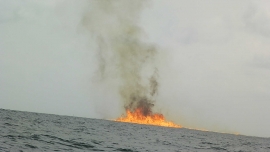
The Challenge of Climate Change: An Urgent Global Concern
By Chris Nku, B.Eng, M.Eng, MNIM, MNSE
Climate change is a change in global or regional climate patterns, including patterns of temperature, precipitation (rain or snow), humidity, wind and seasons. Climate patterns play a fundamental role in shaping natural ecosystems, and the human economies and cultures that depend on them. But the climate we have come to expect is not what it used to be, because the past is no longer a reliable predictor of the future. Our climate is rapidly changing with disruptive impacts, and that change is progressing faster than any seen in the last 2,000 years.
Climate change is attributed largely to the increased levels of atmospheric carbon dioxide produced by the use of fossil fuels.When fossil fuels - coal, oil and natural gas - are burnt they release CO2 into the atmosphere. Because of this the layer of greenhouse gas is getting thicker, which is in turn making the Earth warmer. Thus the ongoing unlimited burning of fossil fuels is the cause of climate change.
The danger associated with the rising levels of carbon dioxide and other heat-trapping gases in the atmosphere have warmed the Earth and are causing wide-ranging impacts, including rising sea levels caused by melting snow and ice, more extreme heat events, fires and drought, more extreme storms, rainfall and floods. Scientists project that these trends will continue and in some cases accelerate, posing significant risks to human health, biodiversity, forests, agriculture, freshwater supplies, coastlines, and other natural resources that are vital to World's environment, economy, and our overall quality of life.
The history of the scientific discovery of climate change began in the early 19th century when ice ages and other natural changes in paleoclimate were first suspected and the natural greenhouse effect first identified. In the late 19th century, scientists first argued that human emissions of greenhouse gases could change the climate. Many other theories of climate change were advanced, involving forces from volcanism to solar variation. In the 1960s, the warming effect of carbon dioxide gas became increasingly convincing, although some scientists also pointed out that human activities, in the form of atmospheric aerosols, could have cooling effects as well.
During the 1970s, scientific opinion increasingly favored the warming viewpoint. By the 1990s, as a result of improving fidelity of computer models and observational work confirming the Milankovitch theory of the ice ages, a consensus position formed: greenhouse gases were deeply involved in most climate changes, and human emissions were bringing serious global warming .
Since the 1990s, scientific research on climate change has included multiple disciplines and has expanded, significantly increasing our understanding of causal relations, links with historic data and ability to numerically model climate change circulation (http://en.wikipedia.org/wiki/global_warming)
The first UN Climate Change Council of Parties (COP), Conference was held in Berlin, in April 1995 with the aim of a global agreement on the reduction of climate change. The 2015 United Nations Climate Change Conference was held inParis, France, from 30th November to 12th December, 2015. It was the 21st yearly session of the Conference of the Parties to the 1992 United Nations Framework Convention on ClimateChange (UNFCCC) and the 11th session of the Meeting of the Parties to the 1997 Kyoto Protocol (John, and Berlinger, 2005).
The conference negotiated the Paris Agreement, a global agreement on the reduction of climate change. The agreement will become legally binding if joined by at least 55 countries which together represent at least 55 percent of global greenhouse emissions. Such parties will need to sign the agreement in New York between 22nd April, 2016 to 21st April, 2017, and also adopt it within their own legal systems. "Nearly 200 Nations Adopt Climate Agreement At COP21 Talks In Paris" (Chappel, 2015). The agreement calls for zero net anthropogenic greenhouse gas emissions to be reached during the second half of the 21st century.
The location of UNFCCC talks is rotated by regions throughout United Nations countries. France serves as a model country for delegates attending COP21 because it is one of the few developed countries in the world to decarbonize electricity production and fossil fuel energy while still providing a high standard of living. As of 2012, France generated over 90% of its electricity from zero carbon sources, including nuclear, hydroelectric, and wind.On 12th December, 2015 the participating 195 countries agreed by consensus to the final global pact, (the Paris Agreement), to reduce emissions as part of the method for reducing greenhouse gas. In the 12-page document, the members agreed to reduce their carbon output "as soon as possible" and to do their best to keep global warming "to well below 2 degrees C"."Nearly 200 Nations Adopt Climate Agreement At COP21 Talks In Paris"(Chappell, 2015).
Nigeria is experiencing adverse climate conditions with negative impacts on the welfare of millions of people. Following release of the 4th Assessment report of the Intergovernmental Panel on Climate Change (IPCC), Africa will be worst hit by the effects of Climate Change, and Nigeria will be heavily impacted (Atilola ,2010) Climate Change is real and evidence abounds in the country.
Although the country has been lucky not to have experienced major climate-change-induced natural disasters, the effect of climate change is evidenced by rise in sea levels and erosion along the nation's coastline; the weather pattern is no longer distinct in the country, we have witnessed very hot weather conditions and high precipitations leading to flooding which ruined crops in parts of the country creating food scarcity. Gully erosion has sacked many communities especially in Edo and Anambra States; as a result of persistent drought, the Lake Chad has almost dried up, while there had been persistent desert encroachment in the north. The dearth of statistical data and non-collection environmental data in a systematic manner make it difficult to estimate in concrete terms the overall effect of climate change on: agriculture and food supply, flooding and erosion, health risks diseases spread, water resources, wildlife, level of CO2 emission and trends in temperature increase, and their effects on the social and economic systems of the country.
A comprehensive audit of the environment is needed to quantify the effects of global warming and the level of degradation and loss of biodiversity, so that we can start to put in place some mechanism for responding to these challenges. Climate change is also affecting Nigeria's energy sector profoundly. Conflict over the use of water resources among different economic sector has adversely affected the hydropower plants in Kainji, Jebba and Shiroro which is the key to the security of electricity supply in the country and represent about one-third of the country's total installed electricity generating capacity.
These plants have produced significantly lower energy leading to epileptic power supply as a result of excessive drought that lead to evaporation affecting water volume and the capacity of the power plants to produce optimally. Incessant power outage increases the cost of doing business and hampers the pace of industrialization in the country (Atilola, 2012). Industries that are dependent on climate sensitive resources or conditions e.g. agro businesses, construction, infrastructure, transportation, pollution control are potentially vulnerable to changes in the climate. Conflicts with indigenous people relating to their displacement, changes to their natural habitat (deforestation, pollution degradation etc), and influences on their ancestral customs and modes of economic production.
How Should Nigeria respond to climate change? Climate change is a reality. Therefore the nation should be proactive in her response to the phenomenon and its challenges and should not wait until much damage is done which will be very costly to correct. Nigeria must take up the challenge and seek cooperation and collaboration with International Agencies in other to create opportunities for technology transfer (Adeyinka et al,2005).
There are a number of adaptation and mitigation options that the country can embark upon using the existing government institutions and NGOs like - Gas Alert for Sustainable Initiative (GASIN) .The Agriculture and Research Institutions should commence research into crops that are resistant to drought and heat. The River Basin Authorities should commence the study, design and construction of new water projects for drought management and erosion control. The Ministries of Environment should start addressing the rapid erosion of the nation's sandy coast by construction of dykes and storm surge barrier against sea level rise; while further development on wetlands, flood plains, and areas close to sea level, especially by the poor who are most vulnerable to disasters, should be stopped.
The mitigation options should start with the gas flaring and oil pollution in the Niger Delta which should be tackled with all the force of government and stopped forthwith. Deforestation should be reduced by encouraging mechanized farming and use of cooking gas instead of wood fuel, while concerted efforts should be made to address aforestation and reforestation. The Ministry of Science and Technology and Universities of Technology should start research into “Clean - Energy Technologies,” Solar Energy, as an ultimate alternative to fossil fuel burning.
A National Climate - Change Adaptation/Mitigation Task Force with members drawn from various relevant Parastatals, Ministries, NGOs, Research Groups and relevant Institutions should be set up to address various responses to Climate change as well as carry out national research program on the effects of climate change on the country. There should be Environmental Baseline Survey and Data for managing environmental problems and climate change for Nigeria. (Adeyinka et al,2005).
References
Adeyinka, M.A., et al, 2005. Country Report, Workshop on Environmental Statistics, Senegal, Feb. 28 – March 4. (www.http://unstats.un.org/unsd/environment/Nigeria; accessed 04/11/2015).
Atilola, Olusola. 2010. “Global Warming and the Nigerian Environment: The Imperatives Surveying and Mapping Services”. Presented at the National Conference of the Nigerian Union of Planetary and Radio Sciences (NUPRS) University of Lagos, Lagos State, (https://www.fig.net/pub/fig2012/papers/ts07f/TS07F_atilola_6098.pd; accessed 04/11/2015)
Atilola, Olusola. 2012.“Climate change and the environment:” Issues and geo-information challenges (https://www.fig.net/pub/fig2012/papers/ts07f/TS07F_atilola_6098.pdf; accessed 03/11/2015).
Chappell, Bill. 2015. "Nearly 200 Nations Adopt Climate Agreement At COP21 Talks In Paris" (www.energylegislation.co.uk; accessed 06/11/2015).
John D.; Berlinger. 2015. "final draft of climate deal formally accepted in Paris"(www.tvr.com/2015/paris-climate -final draft; accessed 05/11/2015)
M. Nicolas J. Firzli, 2015. "Climate: Renewed Sense of Urgency in Washington and Beijing" (https://en.wikipedia.org; accessed 04/11/2015).
New York Times, 2015. "What the Paris Climate Meeting Must Do". (www.nytimes.com; accessed 28/11/2015).

By GASIN Reporter
GASIN pays close attention to the safety of the environment amidst resource exploitation in the Niger Delta. As an expert-based civil society organization exclusively focused on gas, an elaborate desk research into the environmental and health issues associated with gas exploitation has been carried out. Some of the findings highlighting the environmental and common health issues associated with natural gas exploration and processing are herein presented.
These findings are the motivations behind the awareness and enlightenment campaign GASIN carries out in many communities hosting gas facilities in the Niger Delta. It is worrisome to us that the international best practices guiding gas exploitation are not strictly followed and regulated by gas operators and government regulatory agencies respectively, leaving the local people and the environment almost helpless.
Environmental Issues:
Radioactive wastes
Radioactive metals contaminate natural gas. Radon, for instance, is present in natural gas, because natural gas had previously been in contact with underground uranium and thorium-bearing rock and soil which continually release radon. The radon and its progeny remain with the natural gas as it travels through distribution pipes and into homes (ATSDR, 2010). Radium, a potent carcinogen, is also a heavy metal that mixes with natural gas, and also gives off radon gas, accumulates in plants and vegetables and takes 1,600 years to decay; it is known to cause bone, liver and breast cancers (Scientific American, 2009).
Radon is listed as a human carcinogen in the Twelfth Report on Carcinogens published by the National Toxicology Program because it causes lung cancer. Exposure to high levels of radon can cause other lung diseases such as emphysema and thickening of lung tissues whereas simultaneous exposure to radon and cigarette smoking can increase the incidence of lung cancer and lung disease (United States National Library of Medicine, 2012). Gas industry workers, for example, would almost certainly face an increased risk of cancer if they worked in a confined space where radon gas, a leading cause of lung cancer and a derivative of radium, can collect to dangerous levels (Scientific American, 2009).
In addition, radon concentrations have been found to be higher in the natural gas central processing facilities than the wellheads; these high levels are due to pressurizing and concentrating processes that enhance radon gas and its decay products (Al-Masri and Shwiekani, 2008).
In the gas processing facilities, plants that can filter out the radioactive materials are left with a concentrated sludge that has substantially higher radioactivity than the wastewater. Sludge can also collect inside the pipes at well sites, in waste pits and in holding tanks (Scientific American, 2009). Wastewater from natural gas drilling in New York State for instance, has been found to be radioactive, as high as 267 times the limit safe for discharge into the environment and thousands of times the limit safe for people to drink (Scientific American, 2009).
Hazardous materials and wastes
Natural gas processing facilities use and manufacture significant amounts of hazardous materials, including raw materials, intermediate/final products and by-products (WBG, 2007). These include highly toxic liquid effluents and solid wastes that accumulate in the interior surfaces of ethylene glycol regeneration facilities and other processing units within the processing plants. The wastes are dumped off site, leading to serious lethal environmental pollution.
Hazardous air pollutants (HAPs) from natural gas facilities include hydrogen sulfide and certain hydrocarbons such as benzene, a known human carcinogen. Formaldehyde is a HAP found in the exhaust of compressor engines (Ramon and Elizabeth, 2012). Elevated levels of benzene have been detected near some natural gas production sites (Goal, 2008; Coons and Walker, 2008).
In Gas-To-Liquid (GTL) units in natural gas processing facilities, hazardous wastes that are generated include bio-sludge, spent catalysts, spent oil, solvents, and filters (e.g., activated carbon filters and oily sludge from oil water separators), used containers and oily rags, mineral spirits, used sweetening, spent amines for CO2 removal and laboratory wastes (WBG, 2007).
Spent catalysts from GTL production are generated from scheduled replacements in natural gas desulphurization reactors, reforming reactors and furnaces, Fischer-Tropsch synthesis reactors. These spent catalysts may contain zinc, nickel, iron, cobalt, platinum, palladium, and copper, depending on the particular process involved (WBG, 2007). These heavy metals are highly toxic to living organisms including man.
Fugitive Emissions
Fugitive emissions in natural gas processing facilities are associated with leaks in tubing; valves, connections, flanges, packings, open-ended lines, floating roof storage tank, pump, and compressor seals; gas conveyance systems, pressure relief valves, tanks or open pits/containments, and loading and unloading operations of hydrocarbons. The main sources and pollutants of concern include Volatile Organic Compound (VOC) emissions from storage tanks during filling and due to tank breathing; floating roof seals in case of floating roof storage tanks; wastewater treatment units and product upgrading units [World Bank Group (WBG), 2007]. These emissions constitute serious environmental pollution.
Polychlorinated biphenyls (PCBs) Pollution
PCBs are a blend of chemical compounds used in a variety of industrial products because of its chemical and thermal stability. In natural gas systems, PCBs are used as a compressor hydraulic/lubricant and a valve sealant (Environmental Protection Agency [EPA], 2004; Woodyard, 2005). Because these applications allow the PCBs to come in contact with the gas, some of the PCBs would occasionally enter the gas stream (Woodyard, 2005).
Leakages, venting or domestic utilization of PCB-contaminated gas leads to PCBs pollution of the environment. PCBs affect the skin, organ development, glands and hormones, liver, immune system and nervous system, and it is also reasonably anticipated to be Human Carcinogens (Agency for Toxic Substances and Disease Registry [ATSDR], 2011).
Pipeline Explosion
A natural gas pipeline is a potential fire hazard, especially where they run through communities that do not have sufficient pipeline safety precautions and orientation. Both internal and external corrosion of pipelines result in gas leaks. Thus, a rupture or fracture of a gas transmitting pipeline can lead to serious fire, with the accompanying pollution of the air by carbon dioxide and smoke. Moreover, the hitting of the pipeline by the high speed particles at pipeline bends causes erosion of the pipeline surfaces which eventually results in ruptures, with time. This increases the chances of leakages and consequent explosion. Cases of gas leakages are very common in the Niger Delta.
Mercury contamination/pollution
It has been found that natural gas contains mercury as one of the heavy metal contaminants. Mercury has a combination of health effects, which includes developmental (effects during periods when organs are developing), gastrointestinal (digestive), neurological (nervous system), ocular (eyes) and renal (urinary system or kidneys) (ATSDR, 2011).
Venting and Flaring
Venting and flaring are an important operational and safety measure used in natural gas processing facilities to ensure gas is safely disposed of in the event of an emergency, power or equipment failure, or other plant upset conditions. Unrelated raw materials and by-product combustible gases are also disposed of through venting and flaring (WBG, 2007), which constitute serious air pollution that leads to many health issues. This is made worse by the fact that gas travels wherever the wind takes it, and its effluents spread even wider.
Fire and Explosions
Fire and explosion hazards generated by process operations include the accidental release of Syn-gas (containing carbon monoxide and hydrogen), oxygen, and methanol. High pressure Syn-gas releases may cause “Jet Fires” or give rise to a Vapor Cloud Explosion (VCE), “Fireball,” or “Flash Fire,” depending on the quantity of flammable material involved and the degree or pressure of confinement of the cloud. Hydrogen, methane, and carbon monoxide gases may ignite even in the absence of ignition sources if their temperatures exceed their auto-ignition points of 500°C, 580°C, and 609°C, respectively. Flammable liquid spills may cause “Pool Fires” (WBG, 2007).
Moreover, as natural gas begins to collect in a space where there is a gas leak, it becomes more and more volatile. In the most dangerous situations, a natural gas leak can cause an explosion. An explosion can occur when natural gas reaches 4 to 15 percent in the air. It can be ignited by an open flame or electrical appliance. Lighting a cigarette, turning on a light switch, plugging in or unplugging appliances can create the spark needed to create an explosion in a space with a natural gas leak (Casandra, 2012).
Also, leaks of oxygen-enriched gases from gas separation units can create a fire risk. Oxygen-enriched atmospheres may potentially result in the saturation of materials, hair, and clothing with oxygen, which may burn violently if ignited (WBG, 2007).
Air Pollution
Atmospheric emissions from rigs consist mainly of exhausts from diesel engines supplying power to meet rig requirements (drilling, hoisting, electricity, etc.). These emissions may be particulates, oxides of Nitrogen, carbon monoxide, sulfur dioxide and volatile organic compounds (VOCs). Nitrogen oxides and VOCs may combine to form ground level ozone. Impacts would depend upon the amount, duration, location and the meteorological conditions (e.g. wind speed and direction, precipitation and relative humidity). Emissions during this phase would not have a measurable impact on climate change. Sulfur dioxide can lead to corrosion of roofing sheets as a result of fuel burning through combustion; SO2 is released into the atmosphere which when made damp by the weather stays on roof tops thereby eating up the roof so that in France it was estimated that roofs that used to last for 30 years now last for only 4-5 years in worse cases. Similar cases are seen in Niger Delta communities hosting companies with functional gas flare facilities.
Exhaust Gases
Exhaust gas emissions are produced by the combustion of gas or other hydrocarbon fuels in turbines, boilers, compressors, pumps, and other engines for power and heat generation and are a significant source of air emissions from natural gas processing facilities. Incineration of oxygenated byproducts at Gas-To-Liquid (GTL) production facilities also generates CO2 and nitrogen oxides (NOX) emissions (WBG, 2007).
Wastewater
Process wastewater and other wastewaters, which contain dissolved hydrocarbons, oxygenated compounds and other contaminants, are always generated during natural gas processing. This wastewater is normally channeled to a nearby water body (WBG, 2007).
Noise
The principal sources of noise in natural gas processing facilities include large rotating machines (e.g. compressors, turbines, pumps, electric motors, air coolers, and fired heaters) etc. During emergency depressurization, high noise levels can be generated due to release of high-pressure gases to flare and/or steam release into the atmosphere (WBG, 2007). Prolonged exposure to high noise levels lead impaired hearing conditions.
NATURAL GAS AND HUMAN HEALTH
Exposure to natural gas through gas leaks can be harmful. It may lead to explosions and pose serious health hazards that are sometimes even fatal. Small gas leaks accumulate over a period of time and add a significant amount of pollutants that stress the immune system and other bodily functions. According to the National Library of Medicine, "If a natural gas leak has occurred and is severe, oxygen can be reduced, causing dizziness, fatigue, nausea, headache, and irregular breathing" (Casandra, 2012; Deyanda, 2012). Gas leaks can cause serious harm to plants, thus affecting the environmental ecosystem as well (Deyanda, 2012). Some common health issues associated with natural gas are highlighted as follow:
Asphyxiation
One of the major health effects of natural gas leakage (or exposure to methane) is asphyxiation. It is a serious health condition where the body is not able to get sufficient oxygen supply, which may lead to loss of consciousness, brain damage and death. People with high chemical sensitivity are more susceptible to this disease (Deyanda, 2012).
Asthma and Respiratory Illness
Natural gas has been linked to asthma and other respiratory illnesses, especially because it contains, in addition to methane, many toxic impurities including radon and other radioactive materials, BTEX (benzene, toluene, ethylbenzene and xylene), organometallic compounds such as methylmercury, organoarsenic and organolead, mercaptan odorants, nitrogen dioxide, carbon monoxide, fine particulates, polycyclic aromatic hydrocarbons, volatile organic compounds (including formaldehyde), and hundreds of other chemicals (Wimberly, 2000).
Respiratory effects
Leakages and subsequent combustion of natural gas release large amounts of water vapor, ashes, volatile organic compounds and toxic fumes into the atmosphere. These particulates and substances pass through our respiratory system and enter deep into the lungs and body, bringing about respiratory diseases. Natural gas is lighter than air and therefore rises up, concentrating nearer to the head. Associated symptoms such as pneumonia, nausea, vomiting, irregular breathing, memory loss, fatigue, sinus pain and headache are also reported because of the exposure to natural gas leaks in lower concentrations. Some other adverse effects include flatulence, diarrhea, constipation, depression, itching in genitals and pain in hands and legs (Deyanda, 2012).
Reproductive Problems
Benzene, toluene and xylene are members of the BTEX (Benzene, Toluene, Ethylbenzene and Xylene) released during natural gas processing. These toxic compounds have been found to decrease sperm vitality and sperm motility (GuoBing et al, 2001). Thus, communities located around natural gas processing facilities are potentially exposed to these compounds. Moreover, exposure to carbon disulphide and ethylene glycol ethers has been linked to infertility (Lähdetie, 1995).
Physiological Effects
Methanethiol (methyl mercaptan) or ethanethiol (ethyl mercaptan) is the odorant that is added by the natural gas companies to detect its leakage. When inhaled in sufficient amounts, ethanethiol causes physiological effects such as dizziness, headache, vomiting, shivering, fever and unconsciousness. Natural gas may also contain several contaminants like PCBs (polychlorinated biphenyl), benzene, toluene and radon (radon is present in natural gas in its original state). We inhale benzene and toluene during gas leaks. They pose serious health threats. PCBs, benzene and radon are carcinogenic (cancer-causing), whereas toluene may cause reproductive harm (Deyanda, 2012).
Cancer and Birth defects
Researchers have found out that residents living ≤ ½ mile from wells are at greater risk for health effects from natural gas processing facilities than are residents living >½ mile from wells. Cumulative cancer risks are 10 in a million and 6 in a million for residents living ≤ ½ mile and >½ mile from wells, respectively, with benzene as the major contributor to the risk. Subchronic exposures to air pollutants during well completion activities present the greatest potential for health effects (McKenzie et al, 2012).
Benzo-a-pyrene occurs naturally in natural gas extracted from the ground. It inhibits the P53 gene and now has a direct correlation to natural gas. It has therefore been listed as one of the chemicals known to cause cancer, birth defects and reproductive harm (Gascape, 2012).
New research suggests the health of newborn babies is adversely affected in areas close to sites undertaking natural gas extraction by way of hydraulic fracturing, or fracking; the method of obtaining natural gas by blasting shale with a solution of water and chemicals (The Epoch Times, 2012).
It is also documented that fetal exposure to high levels of PCBs, which are also used in natural gas processing facilities, cause skin and nail abnormalities (Rogan, 1982).
References
Agency for Toxic Substances and Disease Registry. (2011). Polychlorinated Biphenyls (PCBs). Toxic Substances Portal: http://www.atsdr.cdc.gov/substances/toxsubstance .asp?toxid=26 (Accessed 29/07/2015).
Agency for Toxic Substances and Disease Registry. (2010). Radon Toxicity: Where Is Radon Found? Environmental Health and Medicine Education: http://www.atsdr.cdc.gov/csem/csem.asp?csem=8&po=5: (Accessed 30/07/2015).
Al-Masri M.S. and R. Shwiekani. (2008). Radon gas distribution in natural gas processing facilities and workplace air environment. Journal of Environmental Radioactivity: Volume 99, Issue 4, April 2008, Pages 574–580.
Code of Federal Regulations. (2003) Polychlorinated Biphenyls (PCBs). Manufacturing, Processing, Distribution in Commerce and Use Prohibitions. Section 40, Part 761 (7-1-03 Edition).
Coons, T.; Walker, R. Community Health Risk Analysis of Oil and Gas Industry Impacts in Garfield County 2008; available online at www.garfield-county.com/public-health/documents/1._COMMUNITY_ HEALTH_ RISK_ANALYSIS-(Complete_Report_16MB).pdf (accessed April 2015).
David Wimberly. (2000). Natural Gas: Avoidable Health Hazard. Natural Gas Health Information Coalition N.S. October 2000. http://www.elements.nb.ca/ theme/fuels/illness/caused.htm(Accessed 25/07/2012).
Deyanda Flint. (2012). Health Problems Related to Natural Gas leaks. http://www.ehow.com/list_6186578_health-related-natural-gas-leaks.html #ixzz20yWREdez (Accessed 29/07/2015).
Goyal, R. (2008). Air Toxic Inhalation: Overview of Screening-Level Health Risk Assessment for Garfield County. Colorado Department of Public Health. ( available online at www.garfield-county.com/public- health/documents/ Air%20Toxics%20Screening%20Level%20Risk%20Assesment%20 Presentation%206%2017%2008%20-%20Dr%20%20Raj%20Goyal.pdf (accessed April 2015).
Gascape. (2012). Chemical Found In Natural Gas Causes Cancer at Cellular Level. //www.gascape.org/index_02/Benzo-a-pyrene.html (Accessed 30/07/2015).
GuoBing XIAO, CuiBao PAN, YaoZhang CAI, Hui LIN and ZhanMing FU. Effect of Benzene, Toluene, Xylene on the Semen Quality and the Function of Accessory Gonad of Exposed Workers.
Lähdetie J (1995) Occupation- and exposure-related studies on human sperm. J Occup Environ Med 37, 922–30.
McKenzie L. M., R. Z. Witter, L. S. Newman and J. L. Adgate. (2012). Human health risk assessment of air emissions from development of unconventional natural gas resources. Sci Total Environ, 1;424:79-87.
National Transportation Safety Board. (2000).Natural Gas Pipeline Rupture and Fire Near Carlsbad, New Mexico August 19, 2000. Washington DC.
Oil and Gas Journal. (2006). Egyptian Gas Plant Employs Absorbents For Mercury Removal. International Petroleum News and Technology: http://www.ogj.com/articles/print/volume-104/issue-46/processing/egyptian- gas-plant-employs-absorbents-for-hg-removal.html. (Accessed 7/8/2012).
Ramón A. Alvarez and Elizabeth Paranhos. (2012). Air Pollution Issues Associated with Natural Gas and Oil Operations. Air Waste Management Association: 1 – 4.
Woodyard John. (2005). Behavior of PCBs in Natural Gas. Weston Solutions. Inc.http://www.northernnaturalgas.com/Document%20Postings/PCB%20White%20Paper%20080805.pdf (Accessed 30/7/2012).
World Bank Group. (2007). Environmental, Health, And Safety Guidelines ForNatural Gas Processing: International Finance Corporation.
Rogan, W.J. (1982). PCBs and cola-colored babies: Japan, 1968, and Taiwan, 1979. Teratology, 26(3): 259-61.
Scientific American. (2009). Natural Gas Drilling Produces Radioactive Waste.
http://www.scientificamerican.com/article.cfm?id=marcellus-shale-natural-gas-drilling-radioactive-wastewater: (Accessed 29/07/2012).
The Epoch Times. (2012).Link Between Low Birth Weight and Fracking, Says New Research http://www.theepochtimes.com/n2/united-states/link- between-low-birth-weight-and-fracking-says-new-research-267746.html (Accessed 30/07/2015).
Tribal Energy and Environmental Information. Oil and Gas Exploration Impacts Environmental Resources for Tribal Energy Development. http://teeic.anl.gov/er/oilgas/impact/explore/index.cfm (Accessed 19-07-2015).
United States Environmental Protection Agency. (2004). Polychlorinated Biphenyl Inspection Manual: In PCBs in Natural Gas Pipelines. Appendix G. http://www.epa.gov/oecaerth/resources/publications/monitoring/tsca/manuals/pcbinspect/pcbinspectappg.pdf (Accessed 29/07/2015).
United States National Library of Medicine. (2012). Environmental Health Concerns of Toxic Chemicals where you live, work and play. Tox Town. http://toxtown.nlm.nih.gov/text_version/chemicals.php?id=27 (Accessed 30/07/2015).

By Dandyson Harry Dandyson
Introduction
Communities in the Niger Delta region of Nigeria face a number of major challenges, some of which arise from their poor socioeconomic conditions, while others are the result of successful agreement making over land and natural resources. How Indigenous communities organise themselves to address these challenges is emerging as a critical issue, and how the non-Indigenous governmental structures and multination companies they play host to facilitate or frustrate those efforts are important components of Reconciliation.
Communities in the Niger delta continue to have the highest rates of poverty, unemployment, early mortality, and lowest levels of education in the country. Household and family incomes remain lower than average, Communities suffer from substantial historical infrastructure and funding gaps, and most rural members of oil and gas host communities live in substandard conditions.
GASIN's Community Governance Project starts from the hypothesis that good governance of oil and gas host communities is essential for effective self-determination and is a key ingredient to successful socio-economic development. This is aimed at strengthening the community governance structures, which were strong and cohesive but today are either weak or lacking legitimacy. The cause of this lack of legitimacy in some community governance structures is that with the advent of oil companies individuals and families, seeking their self -intrest, began to ignore and violate the traditional governance structures in order to deal directly with the companies.
The vacuum thus created began gradually to be filled by people who lack legitimacy before their communities. To stem this erosion of traditional authority, GASIN aims to bring parties together both within and among communities, and also facilitate meetings between communities, operators and regulators. It is also critically important to host communities engaging successfully with developmental organizations, multinational oil companies and governments at various levels.
Currently there are many changes going on in the governance environment, but little is understood about what makes for culturally legitimate and effective community governance and how to attain it. The Project, supported and sponsored by the Dutch Embassy and is being executed by Gas Alert for Sustainable initiative (GASIN) has put together a team of staff and researchers who are working with communities, their organisations and leaders, in order to understand how community governance operates at the local and regional levels.
GASIN's purpose is to foster constructive and mutually beneficial engagements in order to reduce pressure on human rights, environmental rights and on the frail security situation prevalent in these communities. Preliminary work has highlighted a number of issues which will be the subject of more systematic research in coming months and years. Despite important local variations, it is apparent that all the selected community organisations are facing common systemic issues.
The Context of community governance
Community governance does not exist in isolation. It is situated within a wider, inter-connected 'governance environment' that spreads across local, regional, state, territory and national levels. It comprises government and private sector agencies, other Indigenous organizations, nongovernmental organizations (NGOs), institutional forms, networks of relationships, as well as overlapping statutory, policy and jurisdictional frameworks.
And it has inter-cultural dimensions operating across all these layers. It operates as: a field of inter-connected (and disconnected) players; networks of relationships, rights and interests; layered institutions where decision-making, differential power, governing functions and economic activities are dispersed among diverse entities; institutional spheres (state, market and customary) which have an intimate presence in communities; and is marked by different languages of governance and competing expectations.
The Project is concerned to make its research count in host communities by using a participatory community-based approach, called participatory vulnerability analysis (PVA) and participatory research and action (PRA) this process which is carried out by trained community members called Forum on early warning and early response (FEWER) helped to highlight the various vulnerability levels of different groups in the community. SOME PRELIMINARY FINDINGS:
(1) Governance as practiced in Indigenous communities and groups is dynamic, evolving and responsive to different local conditions. The seven selected communities of Gbarain/Ekpetiama Kingdoms of Bayelsa state and the six communities selected in AHOADA WEST LGA of Rivers state formerly Oruama, community governance invariably requires a process of building consensus amongst different groups, and a focus on building a strong traditional chieftaincy installation and guiding principles for succession to help put a stop to the crisis occasioned by chieftaincy struggles, which are capable of destroying lives and property.
(2) The lack of a good Communication strategy is another factor that was highlighted in this research. This is because there is an apparent lack of communication between the community leaders and the members of the community most vulnerable groups are mostly the women, youths and the non-indigenes who reside in the community this is mostly caused by age old customs and cultural belief systems that have become outdated, and perhaps need to be abolished or modified
(3) Absence of proper reporting and documentation system at the community level. Communities do not have proper documentation strategy i.e. none of the selected communities have a community library or filling system. This makes it difficult for proper and effective information gathering and sharing. As a result sensitive community issues get muddled up with individual selfish pursuits. Etc.
(4)The policy, service delivery and statutory environment constitute exogenous conditions also affecting community cohesion. The changing political and policy climate, prevailing jurisdictional arrangements and government funding frameworks, as well as bureaucratic staff turnover, have major impacts on the scope and exercise of Indigenous governance at the community level. Few government departments appear to have effective mechanisms for managing conflicts that arise within Indigenous communities, or bridging the gap between the government's idea of the way the 'community world' should be, and the way it actually is.
There is a lack of capacity within government for ongoing evaluation of their policy practice and service outcomes in the area of community governance. Governments' lack of stable, adequate resourcing, and workable mechanisms for delivering streamlined funding and this is having significant negative impacts on the viability of the communities despite the huge revenue being gotten from the natural resources of these communities.
(5) Lack of sincere and committed partnership between multinational companies and host communities resulting in abandoned projects and unfulfilled Memoranda of Understanding. This militates against needed understanding between communities and oil companies, and causes undue delays and sometimes frustrations of oil industry activities.
(6) Lack of proper written Community Governance handbooks and/or Guiding Principles that clarify the roles of different strata of community leadership. This gives room for individuals with selfish motives to formulate and propagate so-called 'customary' and traditional ways of the community to their personal benefit etc.
Local government
Local government is the organized political unit that is closest to the people and, therefore, the foundation of the democratic structure. Local government is not only expected to deliver democratic values – transparent elections and good governance - at the grassroots, but also to ensure the dividends of democracy captured in service delivery and the improvement in the quality of life of the people. Local government also has a vital role in the management of conflict and natural resources at the local level.
To emphasize the importance of local government in Nigeria, 21 per cent of federal allocation goes to the 774 local government councils in the country. However, numerous challenges have combined to undermine the ability of local government in Nigeria to contribute to democracy, sustainable community development and conflict resolution. It is the weakest link in Nigeria's three-tier government structure. Some of the challenges include lack of accountability and transparency. Corruption is generally perceived to be rife in the councils. The councils lack autonomy which undermines their potential as they are more or less under the thumb print of the state governors.
Local government and conflict management/resolution
The local government uses the official state security apparatus- the criminal justice system especially the Judiciary, Police and Civil Defense Corps as intervention measures for peace keeping. The Police and Civil Defense mainly serve as a stop gap method of conflict management by separating the parties in conflict and stopping further immediate violence. They, in conjunction with the local government may use the alternative dispute resolution methods to reach amicable settlements in informal settings. The courts also apply the judicial processes to adjudicate cases.
The major shortcoming of the judicial approach is its complexity and over-dependence on technicalities. It does not therefore actually serve as very useful organ for resolving the underlying causes of communal conflict. The local government also mediates in inter-and intra-communalconflicts either directly or through intermediaries.
As an alternative dispute resolution approach, mediation is a voluntary and informal method of conflict resolution which outcome is non-binding. The local government intervenes either as authoritative or independent mediator often with a view to bringing the parties to the round table for dialogue. Parties to the conflict can accept or reject the outcome of the mediation process.
The local government sometimes uses traditional rulers and other communal institutions such as the Eze's, Paramount rulers, Kings, etc. depending on the nature of the conflict and the parties involved. This has the advantage of using the laws and customs of the people as they relate to their cultural values and norms. As custodian of traditional institutions, the monarchs are better placed to know the historical and political antecedents of the parties. The major problems associated with the above approaches include: the conflict may be already existing or perceived to be in existence and in some cases have actually escalated. The local government officials are sometimes sympathetic to one of the parties in the conflict since they are essentially communal.
This brings in the elements of bias, suspicion and mutual mistrust. In most cases, conflicts become explosive when government officials, through their actions or inactions are perceived to favor other parties to the conflict. The law enforcement agents and other so called peace makers are susceptible to taking sides especially when there is pecuniary inducement. The implication is that the local government, as presently structured or constituted, lacks an integrated and functionally related strategies or approaches to conflict resolution. There is no specialized unit or department and experts to handle issues relating to conflict. The present approach is haphazardly carried out. Even when investigative panels are setup, the reports are often not released while the recommendations are hardly implemented. Moreover, conflict merchants or entrepreneurs who spur ethno-communal conflicts for the personal benefit they derive from the chaos, often frustrate such ad-hoc or quick fix arrangements.
There are instances where peace committees have been set up, but they are conflict situation-specific; the membership are essentially based on political patronage, lacking the requisite skills for conflict resolution and are easily influenced. This adversely affects the outcome and accounts for the resurgence of communal conflicts.
Recommendations
1. Civil society organisations, NGOs, both the federal and state parliaments and political pressure groups should come together and fight for the autonomy of the LGAs through advocacy, research and publications in order to make local government work by delivering the expected outcomes. This will strengthen local government thereby improving sustainable community governance.
2. Establishment of local government Early warning and early response centre's to help curb the level of destructions caused by community conflicts and natural disasters.GASIN has already set up Early warning and early response groups in some communities in Yenegoa LGA of Bayelsa state and Ahoada west LGA in Rivers state if the LGA chairmen could set up an office to in the councils to handle these reports that will be coming in from the groups in the communities future conflicts might be averted early enough.
3. Establishment of local government Gas and oil spill monitoring centre's to help monitor the activities of multinational firms and the frequency of spills in the oil and gas sector at the community and LGA level regards to the GASIN as also set up gas monitoring groups in some communities in both Yenegoa LGA of Bayelsa state and Ahoada west LGA of Rivers state if the LGA chairmen could set up an office to synergize with the community groups it will help in providing much needed data to help curtail conflicts that occur between companies and host communities.
4. Local governments areas in the Niger delta region should establish a public complaints office specifically for oil and gas related complaints from host/impacted communities.
Local government areas that host oil and gas companies should put together a research team to help inform and advise the council and host communities on the activities being carried out in their domain that might be detrimental and harmful to their health and socio-economic well being;develop tools, through research, for ensuring local government best practice that will be in consonance with international governance best practice and also to help in organizing enlightenment trainings for community based organisations such as the CDC, CHIEFS COUNCIL, YOUTH BODIES, WOMEN GROUPS, GMGs, FEWER etc, to Assist the councils to expand their revenue portfolio through training in collaboration with other relevant agencies. Undertake research and publications on local government affairs.
5. Local government authorities should build a local government data base for public access, including updates on the activities of the councils, through an interactive website to be created to promote local government accountability, transparency, effective service delivery and the enhancement of grassroots/micro democracy through popular participation.
6. Local government authority should assist these host communities to carry out periodic participatory vulnerability analysis (PVA) and participatory research and action (PRA) to help highlight the vulnerability level of the various groups in the communities and the community at large and also to help in promoting gender based activities.
Conclusion
The rising tide of community conflicts, fragmentation and reconfiguration, identity mutation and reconstruction in the Niger Delta are all related to the dynamics of oil politics. This is due to the creation of benefit factors and captors in oil-host communities arising from the policies of the oil companies.
The policies of the oil companies and the emergence of educated and non-educated youth groups have heightened crime and violence in the politics of the Niger Delta oil communities and the region as a whole. The violent youth phenomenon and the general state of militancy and protests have made available enormous quantity of sophisticated arms and ammunitions.
This has caused numerous feuds within and between communities that have led to very bloody and disruptive conflicts; that have; claimed many lives, massively destroyed villages and properties, disrupted oil facilities and production and general insecurity in the Niger Delta.
Thus, the oil multinationals may need to reshape their policies to encourage community harmony if they are to operate in environment devoid of violence and relentless rancorous conflicts. Those unfamiliar with events in the Niger Delta would want to dismiss the above narratives as mere gimmicks aimed at disparaging the image of the oil multinationals, especially NAOC and SPDC in the Niger Delta.
It is a well-known fact that for over three decades, there were no major conflicts between the people and the oil multinationals, and the oil-host communities were not riddled with violent conflicts and the government on the other hand introduce resource control and give total autonomy to the local government council as they are the government that is closest to the people.

Unlikely Partners? The value of CSOs and Oil Companies' Collaboration for Environmental Improvement in the Niger Delta: A Key-note Address
By Rev. Fr. Edward Obi, MSP, Ph.D (National Coordinator of NACGOND)
I must admit that it is quite a challenge for a Social Scientist to address a room full of Engineers and businessmen. I am taking solace in the fact that this challenge, like every other one, also presents an opportunity for our two worldviews to meet somewhere in the middle.
Just as I struggle sometimes to understand why you arrive at some of your conclusions and execute them even after you have missed so much of what I consider crucial to such a decision, I have no doubt that you too must be struggling to understand why I am so blind to what seems so obvious to you. Rather than get frustrated with one another and let our conversation degenerate into name-calling or something worse, let us continue to struggle with this difficult conversation. One thing is clear though, our paths certainly do cross often.
This is why I raise the question as to whether we are in fact partners in the drive to secure our environment even as we drill for oil and gas. However, in so far as our points of departure are different, our partnership is an unlikely one; but a partnership all the same because of the convergences that our common habitat imposes on us.
This principled partnership between SPDC and NACGOND brings together Civil Society actors to engage with the company for the purpose of pursuing and applying environmental and relationship standards that would both shield communities from the adverse effects of the oil and gas industry, as well as guarantee the company's operations. As far as we are concerned, this is a mutually respectful partnership that should never become so cosy as to obscure its original intent.
Many of us may have heard and, probably, even used the saying, “the business of business is business”. In the past it was used by managers of big business concerns to simplify the complexity of business management, which was seen as that of making profit within the bounds of the law. But, more obliquely, it was also used to reduce the responsibility of corporations to whatever consequences may result in their pursuit of profit and the satisfaction of the shareholder.
This way of looking at things tended to create a duality between the oil and gas business and the societal space or environment in which it was conducted. It tended also to absolutise and isolate the 'business' as such from the numerous other interrelated and interdependent organs of society that contributed to a good business environment. Naturally, this approach was highly resented, and in many cases violently resisted by local communities. But things have changed. Internationally, in the last two decades people have became more aware of the moral responsibilities of corporations to society at large.
There are indications that even here in the Niger Delta oil corporations, on their own, are beginning to take the concept of environmental sustainability seriously. More interestingly, you in Shell are making it part of your strategic planning. Whether this is being done with good moral intent or simply to improve your economic bottom line does not remove the fact that something is being done. In fact, the very presence and participation of a CSO coalition like NACGOND, as well as others at this Stakeholder Workshop shows that Shell and its JV partners have realised that they can no longer act as if people and environment do not matter.
Our real reason for engaging with Shell, and hopefully with other operators in the future, is to ensure that this forward movement is not truncated by actions or inaction of any of the parties to this resource dialogue.
Were I to go down the pathway of history you would remember that for millennia, human production and consumption of goods and services was carried out all over the globe in rather unrelated ways, separate, distinct and unknown to each other. But when the humble 'adventures' of Marco Polo in the 16th century brought back stories of rich cultures and rare merchandise from remote and far-flung places, a new level and perception of trade relations was attained, which grew rapidly in the last century or so.
Since the end of World War II and the institution of the Marshall Plan, you would agree, a distinct global economy has emerged, and with it has come tremendous economic growth and the increased interdependence that links elements in the system in functional ways. With globalisation and the quantum leaps of communication technology and information flow, there is a shift from the so-called Information Age to the Age of Convergence or Partnership, where the barriers between Governments, Businesses and Communities are being shrunk in favour of openness and interdependence.
The world has become a smaller place and people know exactly what is happening elsewhere in the business world. It is no longer possible, therefore, for an oil and gas company in the Niger Delta to pretend that no one else knows what they are doing. Indeed corporate morality should not depend on whether people see you or not. It should be motivated by the desire to improve the efficiency of your business, and deploy the technology that can best enable you to achieve this.
On the part of stakeholders like community members, there is a fresh new awareness of universal human rights and the awareness of cultural differences between the owners of capital in Shell, for instance, and the owners of the land here in the Niger Delta. This can, however, be used to create a situation of moral and cultural relativism, in which it easier to legitimate industrial practices considered to be unethical in their own home countries, by referring to a so-called 'local ethos,' and to culturally determined interpretations of it in order to rationalise consequences.
On the other hand, among managers, there has also developed “…a relativism of values…awakened by the dominance of emotivism, the belief that moral values and norms are nothing more than the expression of subjective preference….” If this is true, then every manager would determine for him/herself what is good or bad in relation to social and environmental obligations. This double tension is important in understanding the different points of view of both parties in the dialogue of corporate social responsibility.
The bottom line is that corporations, and their mangers, are no longer being considered amoral and absolute, as if operating in a vacuum, for the sole purpose of maximising profits and returns to their shareholders. In other words, in addition to creating wealth and jobs, corporations are now expected also to improve the living and social standards of the communities in which they live and work, and to protect the environment that provides the raw materials. Thus, “the distinct boundaries of the past are being destroyed by growing awareness of interdependencies. All segments of society, including corporations, are being forced to face the world in its complexity and to deal with it as a whole.”
Finally, because oil and gas companies are made up of people who run them and work them, and because they 'live' among people who let them share their land, water, atmosphere, and even allow their natural resources to be used as raw materials to feed the industry, they must abide by a certain ethics that governs the morality of the workplace, understood here as not only your offices, platforms, well-heads and pipelines, but also the people whose lives are affected by your work.
Therefore the business of business cannot be simply business in the narrow sense in which that term was used before now. The business of business is in fact People and Environment. NACGOND encourages and expects Shell to demonstrate leadership in environmental sustainability and livelihood security for the people affected by your industry.
We remain committed to a partnership that would articulate and promote a new framework for change in the oil and gas sector in Nigeria. Yes, we are Partners!
THANK YOU.
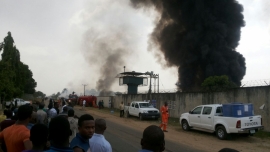
The Day The Earth Trembled In Ebocha | By Dandy Ngbenwa
For the family of Chief Augustus Tom Sunday the 28th day of June 2015 was like any other Sunday. After the Sunday service at his local church he and members of his family had retired for the night rest but suddenly the peaceful quiet night was shattered by the sound; “Boooooommmm! It sounded like the voice of many thunders, our house vibrated and the earth trembled”
“At first I thought that it was a bomb, considering the fluid nature of our community that has witnessed sporadic violence within the past few days” he explained. When Chief Tom came out to investigate, he peeped around in the dark but as he looks towards the general direction of Ebocha, “the night sky was light up by fire”. “Balls of fire were rolling up into the sky and thick clouds of smoke soon enveloped everywhere.”
Ebocha the home to Nigerian Agip Oil Company Limited’s Flow Station and Oil Center Production facilities has suffered years of neglect. So the storage tanks that exploded during the blowout were reported to be more than 30 years old. To many keen observers of the petroleum industry Ebocha was just “a disaster waiting to happen”. Legitimate concerns expressed by local communities about the safety of these facilities were ignored and often viewed with disdain by the Multinational Oil Corporation.
Another respondent interviewed by this reporter said “it was on Sunday at about 10.30 pm there was a serious fire outbreak at Ebocha, it was very serious but no life was lost”. Mr. Festus Wilson told the reporter that the fire was so much that it destroyed substantial part of the oil center facility. He ruled out sabotage, when he was asked if he knew the cause of the fire. “No, no, it is not sabotage” he said.
Though he did not know the number of tanks that got burnt he told the reporter that the fire lasted from Sunday night till Monday evening before it was put out. “But the fire started again on Tuesday morning and was finally brought under control, later in the day.”
When this reporter asked him how the fire affected the people, he said, “All the people living at Ebocha have fled from their homes”.
A lady who gave her name as Iruka Blessing lamented the fact that Nigerian Agip Oil Company has not done anything to help the victims.
“Look I am pregnant and I am yet to recover from the shock” she said. She also complained that all that Agip did was to gather people to narrate how the fire incident affected them without any attempt at alleviating their pains.
Mr. Wilson also complained that Nigerian Agip is slow to responding to the affected communities.
According to Mr. Wilson the source of drinking water for the communities has been heavily polluted.”Water from Nkisa River is black, the same goes for rain water,” he said. “Everything in the community turned into black”.
Narrating her own ordeal a 23 years old Miss Iruka Jane from Ikeduru local government of Imo State who lives opposite the Nigerian Agip company Oil Center, the epicenter of the fire outbreak told the reporter that it was around 11 pm on the Sunday night “when everybody was sleeping, we heard a loud noise and the thing shake the buildings around and the neighboring villages, we came out and saw the fire. And the fire was very, very terrible”. She explained that everybody started running for their dear life.”We later came back and saw that the fire was drawing even closer”
As a result of the intensity of the fire many people fled to neighboring communities while others fled to their home town far away from the fire. Even as I am talking now all my body is paining me. I am calling on the government to come and help us” she said. While speaking to the reporter she explained that there is palpable fear in town for few of them who braved the situation to be there. When she was pressed to explain the source of their worry seeing that the inferno has been brought under control. She told the reporter that there are chances that the fire might be ignited again.
On Tuesday 1st July 2015 when this reporter visited Ebocha though a rural community but always bustling with life, Ebocha was only a shadow of itself. The ever busy Omoku road was deserted, shops were closed. Few people that were still hanging around were seen discussing in groups. In the neighboring communities of Okwuzi, Mgbede and Aggah the situation was the same as men and women were seen in clusters discussing the effects of the Ebocha fire on their communities.
Series of protests has been held by affected communities against Nigerian Agip Oil Company Limited for ignoring the people’s demand for environmental justice.
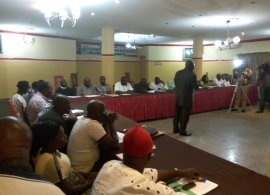
GASIN Patners with NOSDRA to Organize another Stakeholder Roundtable
GASIN, in partnership with the National Oil Spill Detection and Response Agency, NOSDRA, organized a stakeholders roundtable discussion for communities within Rivers state. The meeting was attended by Shell Petroleum Development Company of Nigeria (SPDC), Nigerian Agip Oil Company Limited (NAOC), NOSDRA, Federal Ministry of Environment, Rivers State Ministry of Environment, National Environmental Standards Regulation and Enforcement Agency (NOSDRA), the Police, Paramount Rulers, Women Leaders, CDC Chairmen, youth representatives, GMG Leaders of host communities, the media and other interested members of the public.
Issues bothering the host communities were presented and respectfully discussed upon in an effort to strengthen the relationship among stakeholders of the oil and gas industry. Communities including Aggah, Obrikom, Okwuizi, Mgbede, Obie, Ebogoro were represented in the meeting. A COMMUNIQUE that was adopted by all participants were released after the fruitful deliberations.
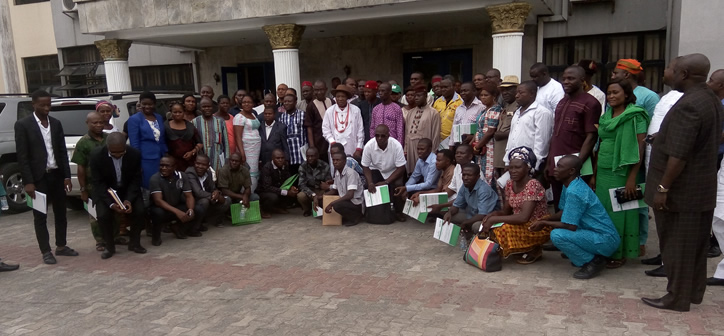
MULTI-STAKEHOLDER' ROUNDTABLE BETWEEN COMMUNITIES, REGULATORY AGENCIES AND OIL OPERATORS
COMMUNIQUE
In an effort to create and strengthen linkages between Communities, Government Regulatory Agencies, and Oil Operators (SPDC and NAOC), the Gas Alert for Sustainable Initiative (GASIN) in partnership with NOSDRA (Port Harcourt, Zonal Office), organized a town hall stakeholders workshop for leaders from Aggah, Ebogoro, Mgbede, Obrikom, Obie and Okwuzi communities in ONELGA, Regulatory Agencies and representatives of SPDC and NAOC.
2. Attendance: see attached list.
3. The Stakeholders resolved that host communities should be consulted before projects are executed under the MOU framework to ensure projects add value to the communities and are sustainable.
4. Sincerity in dealings between the oil operators and the community in terms of execution of projects under the MOU as well as prompt renewal of expired MOU.
5. Appropriate feedback mechanisms between the operators and host communities should be strengthened to check the ugly trend of abandoned projects.
6. Oil operators should consider the employment of qualified indigenes of their host communities when opportunities exist.
7. Safety mechanisms should be put in place by oil operators in their host communities in the event of any emergency issues.
8. Establishment of revolving loan funds, micro-credit schemes as well as agricultural facilities put in place to alleviate the suffering of women and youths.
9. In order to foster environmental sustainability, oil spills should be contained and cleaned without delay and communities should not deny access to the spill sites.
10. Host Communities that have waste pits and other hazardous facilities sited close to them should channel their complaints to the appropriate authorities within the companies for action to be taken.
11. Communities should be committed to make input for improved Sustainable Community Development (SCD) and relations through ownership approach to the projects executed for them by the operators.
12. Operators should enlighten the communities on the normal grievance handling procedure to present their complaints and communities should also avail themselves of this opportunity to enable peaceful relations.
13. Communities should encourage their youths to adequately make use of the available capacity building and empowerment opportunities to improve their performance in order to succeed in SPDC recruitment examinations.
14. Federal Government and the oil and gas operators should put the necessary mechanisms in place to stop gas flaring in their operational areas considering its adverse effects on communities and their sources of livelihood.
15. There should be sincerity in promises made to the communities by the operators.
16. SPDC carries out major projects and other benefits for its host communities (impacted by its facilities) through the GMoU/PGMoU platforms. But some social investments are usually attached to pipeline projects to mitigate impact to the pipeline communities.

NIPCO Says 5,000 Vehicles in Nigeria Powered on Natural Gas
The Nigerian Independent Petroleum Company (NIPCO) Plc, an indigenous downstream petroleum and gas operator, says about 5,000 vehicles use Compressed Natural Gas (CNG) as fuel in Nigeria.
The company said that contrary to other opinions, CNG powered vehicles had come to stay in Nigeria, since the inception of the project in 2009.
Mr Taofeek Lawal, NIPCO’s Head of Public Affairs, told the News Agency of Nigeria (NAN) in Lagos that more than 4,000 vehicles had already converted to use CNG in Benin, Edo.
Lawal said that over 500 vehicles were also operating in Lagos on the environment friendly CNG.
According to him, the aim of the CNG refilling stations in Nigeria, especially in Lagos, was to provide alternative to Premium Motor Spirit (PMS) or petrol at a reduced cost and to boost national socio-economic growth.
He also said that aside the economic gains, CNG targeted reduction of unfriendly automobile emissions and exposure of Nigerians to the innovation of powering vehicles on gas.
NIPCO’s spokesperson said that the company had about 10 CNG operating stations nationwide, while others were under construction.
He said that the patronage of CNG refilling station, at Ibafo, Ogun, was impressive with an average of five minutes’ drive by commercial buses and private vehile owners.
“CNG sustainability in Nigeria and Lagos is sustainable considering Nigeria is one of the largest producers of Natural Gas.
“Ibafo CNG station, near Lagos, is a world class facility with about 12 dispensing pump for light and heavy duty trucks refilling facilities.
“It is also sustainable in that private sector is taking the lead, as government provides enabling environment for it to thrive,” he said.
Lawal said that the conversion of vehicles to become CNG compatible cost between N200,000 and N300,000.
He said that the cost profile of CNG vehicular conversion came with a flexible repayment package and depended on the choice of kit.
He also identified poor awareness about the innovative CNG powered vehicles to the absence of policy on natural gas vehicles and lack of natural gas supply across Nigeria.
Lawal said that stagnation of CNG revolution in Nigeria was also due to the inability of NIPCO and the Nigerian Gas Company to float a Joint Venture (JV).
He said that the lack of gas infrastructure, pricing and government support was militating against CNG expansion in Lagos.
“Nigerians are well informed towards the CNG projects but it could improve.
“The best time for CNG popularisation is when government increase the price of PMS to further compel motorist to think of the cost benefits of powering vehicles with natural gas.
“N55 per standard cubic feet of gas is equivalent to one litre of petrol which currently sells at N87 with government subsidy.
“All the necessary approval from DPR has being obtained before commencement of operation,” he said.
Lawal said that NIPCO had concluded arraignment to build CNG refilling stations in Lagos and environs.
NAN gathered from some officials at the Ibafor CNG refilling station that motorists paid initial deposits of about N20,000 for conversion with the balance deducted through daily purchase of gas.
“When you want to convert your motor to gas, you will pay as low as N20,000, then we will put you on installment payment anytime you come to fill your cylinder.
“This method makes it convenient for our customers to pay within some months depending on your usage.
“A cubic feet of gas cost N55, if you are on our debt list, you will be paying N80 per cubic feet which means that remaining N25 will be servicing your debt.
“This will continue until you complete the payment.
“Because of this payment method, we have over 5,000 vehicles running on CNG in the country,” he said.
Meanwhile, some motorists plying Lagos/Ibadan expressway described CNG powered vehicles as economical, safer, flexible and eco-friendly.
Mr Ibrahim Kareem, a commercial motor driver, said that the conversion of his vehicle to CNG early 2015 had saved him money.
“I converted my bus to gas early this year and I am happy to tell you that I saved up to N7,500 daily on my fuel consumption.
“Before now I spent N6,000 to travel to Ibadan from Lagos but now with just N3,750, I will travel to Ibadan and come back with ease,” he said.
Mr Sunday Adeyemi, another commercial vehicle driver, said that most of the commercial vehicles operating between Lagos and Ibadan had converted to CNG because of its availability and the economy of scale.
“Most of us here have converted our motors to CNG because of the installment payment created by the company.
“They are aware that we cannot run away once you got converted.
“What we would have used on petroleum is being used to balance our debt; by next month, I would have completed my debt,” he said.
Adeyemi said that he used the availability of CNG in his vehicles during the petrol scarcity to make more money.
“When others did not get petroleum for transportation during the fuel scarcity, I was busy making money because gas was available and cheap,” he said.
Mr Daniel Folorunsho, a civil servant with Lagos State Government, said that CNG was Eco-friendly and management friendly.
“Before my friend introduced me to CNG, I serviced my car every three months but now, I service it once in six months because of its Eco-friendly nature.
“It is clean and there will be no smoke coming from your motor.
“The government should enlighten road users on the advantages of CNG because it is better than petrol and it is economical and safer.
“Even the subsidy government is paying on petroleum products will reduce if more emphasis is placed on CNG usage,” he said.
The post NIPCO Says 5,000 Vehicles in Nigeria Powered on Natural Gas appeared first on Metro Watch.